Mastering 3D Tic Tac Toe for KDP Success
Tic Tac Toe is one of the most recognizable games in human history. Everyone knows the rules, and it requires zero equipment to play on a napkin or in the sand. However, when you elevate this classic two-dimensional game into three dimensions, the complexity, strategy, and entertainment value skyrocket. This evolution has created a unique niche in the puzzle and activity book market: 3D Tic Tac Toe. For entrepreneurs looking to enter the self-publishing space, particularly through Amazon Kindle Direct Publishing (KDP), offering high-quality interior designs for these puzzles presents a compelling opportunity.
The appeal of 3D Tic Tac Toe lies in its ability to challenge the brain in ways that flat grids cannot. It transforms a simple childhood pastime into a spatial reasoning exercise. For the modern creator, this means more than just filling pages with squares; it involves providing an engaging experience that keeps users coming back. Whether you are a seasoned publisher or a beginner exploring low-content books, understanding the mechanics and market potential of this genre is essential.
Understanding the Game Mechanics and Appeal
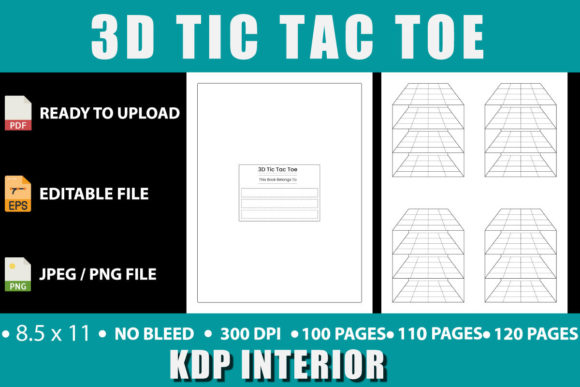
At its core, 3D Tic Tac Toe expands the playing field from a 3x3 grid to a 3x3x3 cube. Instead of trying to get three marks in a row horizontally or vertically, players must align their symbols across rows, columns, pillars, and even diagonals that cut through the center of the cube. This added dimension significantly increases the number of winning combinations, making the game much harder to solve and far more addictive.
For adults aged 20–50, who make up a significant portion of the puzzle book market, this level of challenge is highly desirable. Unlike simple crosswords or mazes, 3D puzzles require visualization skills and logical deduction. They serve as excellent mental workouts, helping to improve focus and spatial awareness. When designing interiors for KDP, recognizing this cognitive benefit allows you to market your book not just as "entertainment," but as a tool for mental fitness.
The visual aspect of 3D Tic Tac Toe also offers creative freedom. Designers can present the puzzles in various formats, such as isometric drawings, net diagrams, or step-by-step unfoldings. This variety prevents the content from feeling repetitive, which is crucial for retaining customer interest in a journal or activity book format.
Why 3D Tic Tac Toe Works for KDP Entrepreneurs
Starting a KDP business requires products that are easy to produce yet have high perceived value. A 3D Tic Tac Toe Journal fits this criteria perfectly. The interior design is relatively straightforward compared to complex novels or illustrated children’s books, yet it appeals to a broad audience. Parents buying gifts for teenagers, professionals seeking desk activities, and hobbyists looking for daily challenges all represent viable target markets.
One of the biggest hurdles for new KDP sellers is creating print-ready files that meet strict formatting guidelines. Many beginners struggle with bleed settings, margin requirements, and file compatibility. This is where pre-made, tested templates become invaluable. High-quality interior assets allow creators to bypass the technical learning curve and focus on marketing and sales. By using resources that provide ready-to-upload PDFs, JPEGs, and editable AI files, you ensure that your book looks professional from day one.
Furthermore, the specificity of the product helps in SEO optimization. While generic "activity books" face intense competition, niches like "3D Tic Tac Toe Journal" attract users with specific intent. These users are often further along in the buying journey because they know exactly what type of puzzle they want. By targeting this specific keyword phrase, you increase the likelihood of visibility among the right audience.
Key Specifications for a Professional Interior
To compete effectively in the KDP marketplace, attention to detail is non-negotiable. The standard size for many activity and puzzle books is 8.5 x 11 inches. This large format provides ample space for clear graphics and comfortable writing, which is essential for a puzzle book where users need to mark their moves. Smaller sizes can sometimes feel cramped, leading to frustration during gameplay.
Page count is another critical factor. A typical range for these journals falls between 100 and 120 pages. This length offers enough variety to keep a user engaged for weeks without becoming too thick to ship efficiently. Thinner books may seem like less value to customers, while thicker ones can drive up printing costs, reducing your royalty margins. Finding the sweet spot ensures profitability while maintaining customer satisfaction.
Bleed settings are perhaps the most technical yet important aspect. Most 3D Tic Tac Toe designs include borders or background colors that extend to the edge of the page. If you choose a No Bleed option, you must ensure there is a safe zone for text and critical elements to avoid them being trimmed off during printing. Conversely, if you opt for bleed, your images must extend beyond the trim line. Pre-designed files that specify whether they are bleed or no-bleed help prevent costly reprint errors and negative reviews due to poor print quality.
Leveraging Editable Files for Customization
Not every creator wants to use a template exactly as provided. Some may wish to add their own branding, change fonts, or adjust the difficulty levels of the puzzles. Access to editable AI (Adobe Illustrator) files empowers you to customize your product deeply. You can tweak the layout to fit your brand identity, ensuring consistency across multiple titles in your catalog.
Even if you do not have advanced design skills, having access to layered files allows you to hire affordable freelancers on platforms like Fiverr or Upwork to make minor adjustments. This flexibility is a major advantage over static PDF-only products. It enables you to iterate quickly based on customer feedback. For instance, if users complain that the grids are too small, you can easily scale them up in the AI file and re-export the PDF for upload.
Additionally, having JPEG versions of your pages can be useful for promotional materials. You can create eye-catching social media posts or Amazon ads showcasing sample puzzles from your book. Visual proof of the interior quality builds trust with potential buyers before they click "Buy Now."
Practical Considerations Before Launching
Before uploading your 3D Tic Tac Toe journal to KDP, it is wise to test the final PDF. Ensure that all lines are crisp and that there are no stray pixels or alignment issues. KDP has rigorous quality standards, and rejected manuscripts can delay your launch. Many providers offer files that have already been tested on KDP, which significantly reduces the risk of rejection.
Another consideration is the target audience’s skill level. While 3D Tic Tac Toe is challenging, it should remain accessible. Include brief instructions on how to play the 3D version in the front matter of your book. This adds value and ensures that even those unfamiliar with the 3D variant can enjoy the content. Clear instructions also reduce customer service inquiries and returns.
Finally, think about the broader context of usage. People buy these journals for travel, office breaks, or quiet evenings at home. Positioning your book as a perfect companion for downtime can enhance its appeal. Marketing copy that highlights portability, mental stimulation, and endless hours of fun will resonate more strongly than dry technical descriptions.
In summary, the combination of a timeless game mechanic with modern publishing tools creates a robust opportunity for aspiring KDP publishers. By focusing on high-quality, customizable, and properly formatted interiors, you can build a sustainable business around 3D Tic Tac Toe journals. The key is to start with reliable assets, understand your audience’s needs, and continuously refine your offerings based on real-world performance.