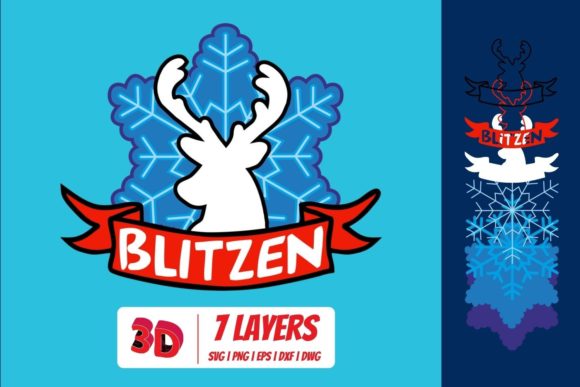
The Ultimate Guide to Using the 3D Layered Blitzen SVG Cut File for Holiday Crafts
As the holiday season approaches, crafters and DIY enthusiasts everywhere begin searching for ways to bring warmth and whimsy into their homes. Among the most beloved symbols of winter festivities is the reindeer, and specifically, the festive "Blitzen." Whether you are a seasoned scrapbooker or a beginner just picking up your first cutting machine, creating three-dimensional decorations adds a unique layer of depth and professionalism to your projects. This guide explores everything you need to know about the 3D Layered Blitzen SVG Cut File, how to utilize its various formats, and why this digital asset is an essential addition to your creative toolkit.
What Is a 3D Layered Blitzen SVG?
At its core, a Blitzen 3D Layered SVG Cut File Download is a digital design file that allows you to create a multi-dimensional reindeer figure. Unlike standard flat cut files, which produce a single-layer silhouette, layered designs consist of multiple separate pieces that stack on top of one another. When assembled correctly, these layers create an illusion of depth, turning a simple paper cutout into a striking piece of wall art, a dimensional greeting card, or a charming ornament.
The term "Blitzen" refers to one of Santa’s nine reindeer, known for his speed and agility. The design typically captures the iconic profile of a reindeer with antlers, often adorned with festive elements like bells, bows, or snowflakes. By using a layered approach, the artist can emphasize the curve of the neck, the structure of the antlers, and the texture of the fur, resulting in a visually rich image that stands out from traditional flat crafts.
Understanding the File Formats: SVG, DXF, EPS, and PNG
One of the greatest advantages of purchasing a high-quality digital craft file is the variety of formats included. A typical download package for a 3D Layered Blitzen SVG comes as a zipped folder containing several file types, each serving a specific purpose depending on the software you use. Understanding these formats ensures you can work seamlessly with whatever equipment you have on hand.
SVG: The Standard for Cutting Machines
The SVG (Scalable Vector Graphics) format is the gold standard for modern electronic cutting machines. It is vector-based, meaning it can be resized infinitely without losing quality. When you import an SVG into your cutting software, the program reads the individual paths and shapes, allowing the machine to cut precisely along the lines. For users of Cricut Design Space, Silhouette Designer Edition, Make the Cut MTC, Sure Cuts A Lot (SCAL), and Brother ScanNCut Canvas, the SVG is the primary file you will use. It supports complex layering, making it perfect for assembling the 3D effect of the Blitzen design.
DXF: Compatibility for Basic Software
If you are using older or more basic software, such as Silhouette Basic Edition, you might encounter compatibility issues with SVGs. This is where the DXF (Drawing Exchange Format) file comes in handy. DXF is an older vector format that is widely supported by legacy programs. While it may not always support color data or certain advanced features found in newer software, it reliably provides the geometric data needed for cutting machines to follow the design paths.
EPS: For Professional Design Software
For graphic designers who prefer professional desktop publishing tools, the EPS (Encapsulated PostScript) format is ideal. This file type can be opened and edited in industry-standard applications like CorelDraw, Inkscape, and Adobe Illustrator. If you wish to modify the Blitzen design—perhaps by adding text, changing colors, or adjusting the size before sending it to a cutter—the EPS file gives you full control over the vector nodes and curves.
PNG: Visual Reference and Stamping
Finally, the package includes a PNG (Portable Network Graphics) file. This is a raster image, meaning it is made of pixels rather than vectors. However, because it is saved with a transparent background at 300 DPI (dots per inch), it serves as a high-resolution visual reference. You can use this image to see exactly what the final assembled product should look like. Additionally, if you are stamping fabric or wood and need a stencil guide, the PNG can be printed out to help you trace the design manually.
Software Compatibility: Making It Work for You
One of the most common questions crafters ask is whether their specific software can handle a 3D Layered Blitzen SVG Cut File. The good news is that the included formats cover almost every major platform in the crafting world. Here is a breakdown of how these files integrate with popular tools:
- Cricut Design Space: Upload the SVG file directly. Use the "Weld" or "Attach" functions to keep layers aligned during cutting. The layered nature of the Blitzen design allows you to assign different colors to each layer, creating a vibrant final piece.
- Silhouette Studio (Designer & Basic Editions): Designer Edition handles SVGs natively, offering robust layer management. Basic Edition users should rely on the provided DXF file to ensure smooth operation without glitches.
- Make the Cut (MTC) & Sure Cuts A Lot (SCAL): Both of these powerful third-party programs excel at handling complex layered files. They allow for precise nesting of cuts, which saves material when cutting multiple Blitzen figures at once.
- Brother ScanNCut Canvas: This cloud-based software simplifies the process by allowing you to upload SVGs and manage layers via a user-friendly interface, perfect for beginners who want a streamlined experience.
- Adobe Illustrator & CorelDraw: Professionals can open the EPS files to tweak the design. For instance, you might want to thin out certain lines to prevent paper tearing or adjust the spacing between layers to enhance the 3D effect.
How to Assemble Your 3D Layered Blitzen
Once you have downloaded the zip folder and imported the files into your chosen software, the real fun begins: assembly. Creating a 3D layered design requires patience and precision. Here is a general workflow to ensure your Blitzen turns out perfectly:
- Sort Your Layers: Most layered files come with layers numbered or named in order (e.g., Layer 1 is the back, Layer 5 is the front). Keep track of this order, as stacking them incorrectly will ruin the 3D illusion.
- Select Your Material: Cardstock is the most common choice, but you can also use foam sheets, felt, or chipboard for durability. For a softer look, try layered vellum for a translucent effect.
- Cut Carefully: Ensure your blade is sharp and your mat is sticky enough to hold the material firmly. Delicate details, such as the tips of the antlers, require a clean cut to avoid fraying.
- Peel and Stack: Start with the largest, backmost layer. Apply a thin line of adhesive to the back of the next layer and center it carefully. Repeat until all layers are stacked.
- Add Dimension: To enhance the 3D effect, consider using foam tape or double-sided spacers between key layers, such as the body and the head, to make the reindeer pop off the page.
Why Choose Digital Craft Files?
In an era where convenience meets creativity, digital cut files have revolutionized the crafting hobby. Purchasing a Blitzen 3D Layered SVG Cut File Download offers several benefits over drawing designs from scratch. First, it saves time. Instead of spending hours drafting vectors, you get a professionally tested design ready to cut immediately. Second, it ensures consistency. Every time you cut the Blitzen, it looks identical, which is crucial for creating matching sets of ornaments or cards.
Furthermore, these files are reusable. Unlike physical kits that are used once, a digital file can be printed and cut thousands of times. This makes it an economical choice for small business owners selling handmade holiday goods or parents making gifts for classrooms. The versatility of the formats means that no matter what technology you own, you can participate in the craft.
Common Misconceptions About Layered Designs
Beginners often assume that 3D layered files are difficult to assemble. While they do require more steps than a single-layer cut, the process is straightforward once understood. Another misconception is that you need expensive software to use them. As noted earlier, the inclusion of DXF and SVG formats ensures compatibility with free or entry-level software options.
Some crafters worry about the resolution of digital files. However, because SVG, DXF, and EPS are vector formats, they remain crisp at any size. You can resize a tiny ornament design to fit a large poster board without pixelation, provided you use the correct vector file types.
Conclusion
The 3D Layered Blitzen SVG Cut File represents the perfect blend of holiday spirit and technical innovation. By providing a versatile package that includes SVG, DXF, EPS, and PNG formats, it ensures that every crafter—from the tech-savvy designer using Adobe Illustrator to the classroom teacher using a basic Cricut—can bring this festive character to life. Whether you are decorating your home, creating personalized gifts, or running a small Etsy shop, this downloadable asset offers endless possibilities for creativity. Embrace the ease of digital crafting and let your Blitzen stand out in three dimensions this holiday season.