Bringing the Deep Sea Home: The Art and Craft of a 3D Bluefin Tuna Shadow Box
For many enthusiasts, FishFishing is more than just a pastime; it is a lifestyle defined by patience, skill, and the thrill of the catch. There is something profoundly satisfying about reeling in a massive game fish, especially one as iconic and powerful as the Bluefin Tuna. However, once the photo is taken and the fish is released or processed, the memory can sometimes fade into the background of daily life. This is where the art of preservation steps in. A 3D Fishing Shadow Box offers a unique way to honor that achievement, transforming a digital image or a physical specimen into a stunning piece of wall art that captures the depth, texture, and drama of the ocean.
The trend of creating layered paper art has exploded in recent years, driven largely by the accessibility of cutting machines like Cricut and Silhouette. Among the most popular subjects for this medium are marine themes, with the Bluefin Tuna standing out as a premier choice. Its sleek, aerodynamic shape and vibrant coloration make it an ideal subject for multi-layered designs. By utilizing a specialized file set designed specifically for shadow boxing, hobbyists can create a three-dimensional masterpiece that looks like it was plucked straight from the depths of the sea.
Understanding the Architecture of a 3D Paper Design
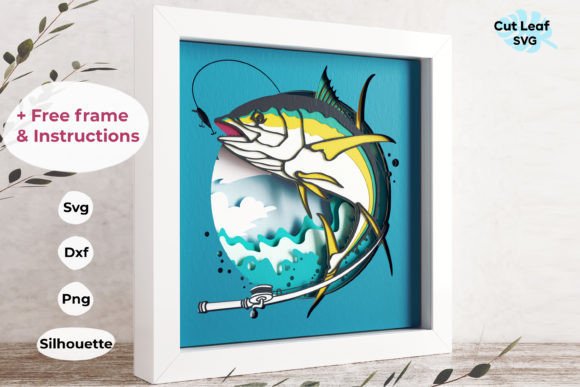
What makes a shadow box truly impressive is not just the final image, but the engineering behind it. Unlike a flat cutout, a 3D shadow box relies on precise layering to create depth. The design we are discussing consists of 12 distinct layers, each numbered meticulously to ensure correct assembly. This numbering system is crucial; it guides the crafter through the process, ensuring that the foreground elements, such as the tuna itself, sit correctly against the mid-ground water textures and the background horizon.
The beauty of this specific design lies in its scalability and compatibility. The files are sized to fit an 8.5 x 8.5 inch inner frame size. This standard dimension is widely available at most craft stores and home decor shops, making it easy for creators to source materials without custom ordering. Furthermore, because the files are designed to be cut from standard 8.5x11-inch cardstock, there is no need for expensive specialty paper or large-format printers. You simply print your guide (if using a printer-assisted method) or use the vector files directly on your cutting machine.
While the base design fits the 8.5x8.5 frame perfectly, the digital nature of these files means they are fully scalable. If you have a larger frame in mind, you can scale the SVG or DXF files up proportionally. However, it is important to note that scaling too far may require thicker cardstock to maintain structural integrity, so testing a small section first is always a wise recommendation.
File Formats and Workflow Compatibility
One of the biggest hurdles in crafting is often technical compatibility. Not everyone uses the same software, which is why this package is comprehensive. It includes a variety of formats to ensure that whether you are a beginner with a basic cutter or a pro with advanced software, you can use these files effectively.
- SVG (Scalable Vector Graphics): This is the gold standard for modern electronic cutters. The included SVG file is optimized for Cricut Design Space and Silhouette Designer Edition. These formats allow for clean lines and easy manipulation within the software interface.
- DXF (Drawing Exchange Format): Included are two DXF files. One is tailored for CNC machines, appealing to woodworkers or those using laser cutters who want to replicate this design in acrylic or wood. The other is compatible with Silhouette Basic Edition, ensuring that users without the premium software version can still access the design.
- Silhouette Studio File: For those who rely heavily on the Silhouette ecosystem, a native studio file is provided. This ensures seamless use with Silhouette Studio, preserving all layer groupings and cut settings without the need for conversion.
- EPS (Encapsulated PostScript): This legacy vector format is essential for professionals using desktop publishing tools. It is fully compatible with Adobe Illustrator, Corel Draw, Inkscape, and Make The Cut. This allows designers to edit colors, adjust spacing, or integrate the tuna design into larger composite projects.
- PNG (Portable Network Graphics): Finally, a high-resolution PNG with a transparent background is included. While not a cutting file, this is incredibly useful for digital planners, scrapbooking layouts, or for printing a reference image to help with manual cutting if you don’t own a machine.
The Assembly Process: From Flat Sheets to Depth
Creating a 3D Fishing Shadow Box is a meditative process. Once the files are loaded into your chosen software and sent to your cutter, the real work begins. The package comes with a detailed PDF of instructions and a Layers Guide. These resources are invaluable, particularly for beginners who might find the concept of "depth" abstract.
The process typically involves cutting each layer from cardstock of varying weights. Heavier cardstock (such as 110lb or 120lb) is recommended for the background layers to provide a sturdy base, while lighter cardstock (65lb to 80lb) works well for intricate foreground details like the fins and gills of the Bluefin Tuna. After cutting, the layers are adhered together using foam tape or double-sided spacers. This creates the physical gap between layers that gives the artwork its 3D effect when viewed from an angle.
When assembling, pay close attention to the alignment marks. Most professional designs include registration marks or crosshairs to help you stack the layers perfectly centered. Misalignment can ruin the illusion of depth, making the fish look distorted rather than dynamic. The goal is to create a sense of movement, as if the tuna is swimming right out of the frame toward the viewer.
Why Choose a Bluefin Tuna Design?
The choice of subject matter matters. A generic fish silhouette lacks the character of a species-specific design. The Bluefin Tuna is recognized globally as the king of game fish. Its presence commands respect and admiration. In the context of FishFishing, displaying a Bluefin Tuna shadow box serves as a conversation starter. It tells a story of endurance, speed, and the raw power of nature.
Moreover, the color palette of a Bluefin Tuna lends itself beautifully to paper art. The deep indigo back, silver sides, and creamy belly provide natural contrast that pops even in monochrome or sepia-toned paper choices. However, most creators choose to use colored cardstock to mimic the true hues of the fish, adding another layer of realism to the piece.
Practical Considerations for Display
Once your 3D Fishing Shadow Box is complete, display becomes the final consideration. Because the design is sized for an 8.5 x 8.5 inner size frame, you will need a frame that accommodates the extra depth created by the layered paper. Standard picture frames are usually too shallow. Look for "shadow box frames" or frames with a deep rabbet (the inner groove). Many craft stores sell pre-made shadow box frames specifically for this purpose.
Lighting also plays a role. Since the design relies on shadows to define the layers, directional lighting can enhance the 3D effect. Placing the frame under a spotlight or near a window can cast subtle shadows between the layers, emphasizing the contours of the tuna. Avoid direct sunlight, however, as UV rays can fade the cardstock over time.
Conclusion for the Crafter
Whether you are a seasoned papercrafter looking to expand your portfolio or a fishing enthusiast wanting to preserve a trophy catch digitally, this 3D Fishing Shadow Box kit offers a robust solution. With its wide range of file formats, clear instructions, and timeless subject matter, it bridges the gap between technology and traditional craft. It allows you to take the excitement of the open ocean and bring it into your home, office, or boat house in a tangible, beautiful way. By following the included layers guide and utilizing the correct cutting settings, you can produce a professional-grade piece that honors the spirit of FishFishing and the majesty of the Bluefin Tuna.